Brown Noise vs. White Noise for Sleep: Which "Color" Quiets Your Mind Best?
Silence Isn't Always Golden: The Science of Sound Masking
For centuries, we thought silence was the ultimate requirement for sleep. We bought earplugs, soundproofed windows, and tiptoed around sleeping babies. But for millions of people—especially those with tinnitus, anxiety, or ADHD—silence is deafening. In the absence of sound, the brain amplifies internal thoughts and minor external noises, making sleep impossible.
Enter the world of "Colored Noise." Just as light has a spectrum of colors (rainbow), sound has a spectrum of frequencies. By mixing these frequencies differently, we create "colors" of noise that can soothe the nervous system, mask disrupting sounds, and induce deep sleep.
But which color is right for you? Is it the classic White Noise, or the deep, rumbling Brown Noise that has taken the internet by storm? In this guide, we decode the physics of sound and help you build the perfect sonic sleep environment.
White Noise: The "Static" Blanket
What is it? White noise is the most famous color. Technically, it is a mixture of all audible frequencies (20Hz to 20,000Hz) played at the same intensity.
- Sounds like: Untuned TV static, a whirring fan, or a hissing radiator.
- Why it works: Because it contains every frequency, it creates a "wall of sound." It is incredibly effective at masking sudden noises—like a door slamming or a dog barking—because your auditory cortex is already "occupied" by the white noise.
- The Downside: Because it has equal energy across the spectrum, it includes a lot of high-frequency (high-pitched) sounds. For many people, this can feel "harsh," "tinny," or even anxiety-inducing after a while.
Brown Noise: The "Rumbling" Blanket
What is it? Brown noise (technically Brownian noise) lowers the volume as the frequency goes up. It puts almost all its energy into the low, bass frequencies.
- Sounds like: A distant thunderstorm, a heavy waterfall, or the low roar of an airplane cabin.
- Why it is trending: Brown noise has gone viral, particularly in the ADHD community. Unlike the "hiss" of white noise, the deep "rumble" of brown noise is felt physically. Many users report it "quiets the internal monologue" instantly, acting like a weighted blanket for the brain.
- The Benefit: It is much softer on the ears than white noise because it lacks the harsh high-pitched frequencies.
Pink Noise: The Perfect Balance?
What is it? Pink noise is the middle ground. It is white noise but with reduced high frequencies. It mimics the frequency distribution found most often in nature.
- Sounds like: Steady rain, wind rustling through leaves, or ocean waves.
- The Science: Studies suggest Pink Noise may actually enhance deep sleep (Slow Wave Sleep) and improve memory consolidation better than silence or white noise.
The Danger Zone: Sleeping with Headphones
If you have decided to try Brown or White noise, you are likely reaching for your headphones or earbuds. Stop and read this section carefully.
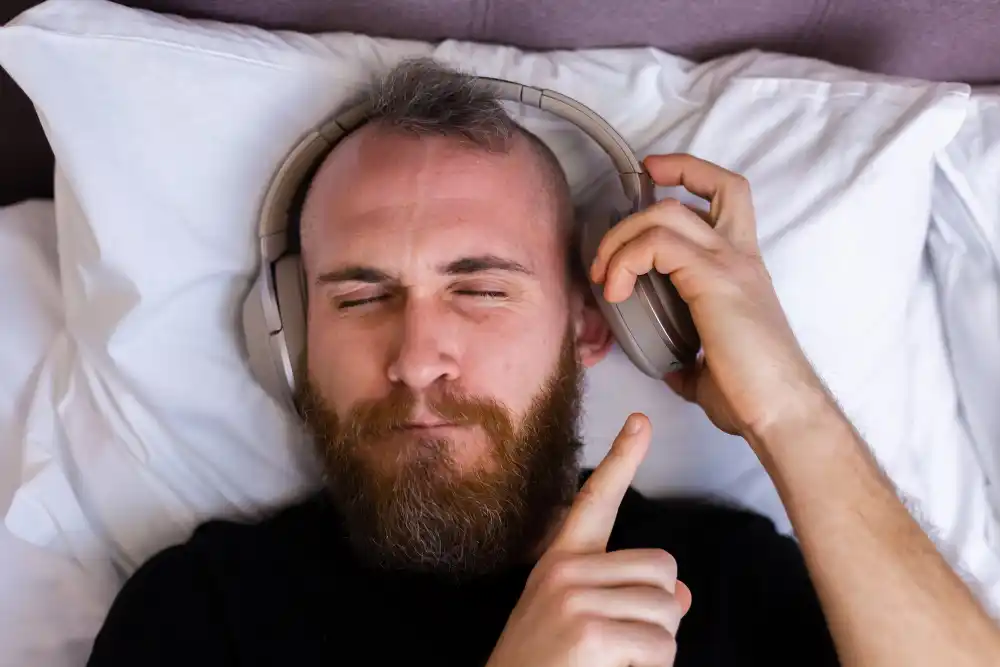
Sleeping with headphones poses two major risks:
- Ear Infection/Wax Buildup: Earbuds block air circulation, creating a warm, moist environment perfect for bacteria.
- Noise-Induced Hearing Loss: This is the big one. Because you are listening for 8 hours straight, the volume must be kept significantly lower than daytime listening levels. "Safe" volume is determined by duration. Listening at 85dB is safe for a few hours, but dangerous for 8 hours.
Are Your Sleep Sounds Damaging Your Ears?
You might be destroying your hearing while you sleep without knowing it. Before you press play tonight, verify your safe volume and duration limits with our Headphone Safety Calculator.
Which Color Should You Choose?
Here is a quick cheat sheet to find your match:
| If you suffer from... | Try This Color | Why? |
|---|---|---|
| Tinnitus (Ringing Ears) | White Noise | The high frequencies help mask the high-pitched ringing. |
| Anxiety / Racing Thoughts | Brown Noise | The deep rumble is grounding and calming for the nervous system. |
| Sudden Noises (City Living) | White Noise | Creates the best "sound wall" to block sirens/cars. |
| Light Sleeper | Pink Noise | Gentle and balanced; proven to increase deep sleep stability. |
Beyond Noise: Holistic Sleep Hygiene
While Brown Noise might help you fall asleep, it cannot fix a broken sleep schedule or caffeine addiction. Noise is a tool, not a cure-all. For the best results, pair your sound therapy with these biological hacks:
1. Timing is Everything
Even with the perfect playlist, waking up in the middle of a deep sleep cycle will leave you groggy. Time your alarm to your biological rhythm.
Tool: Sleep Cycle Calculator.
2. The Caffeine Factor
If you are drinking coffee at 4 PM, no amount of Brown Noise will sedate you. Adenosine blockers (caffeine) are stronger than sound waves.
Tool: Caffeine Cut-off Calculator.
3. The Blue Light Factor
Are you listening to Brown Noise on YouTube while staring at the screen? The blue light is suppressing your melatonin while the sound tries to relax you. It's a biological conflict.
Tool: Screen Time & Eye Strain Calculator.
4. Chronic Fatigue?
If you've been relying on noise to sleep for months but still feel tired, you may have accumulated massive sleep debt. It takes time to pay it back.
Tool: Sleep Debt Calculator.
Conclusion: Experiment and Listen
There is no "best" noise for everyone. The best sound is the one that makes your brain feel safe enough to turn off. Tonight, try swapping your usual fan for a "Deep Brown Noise" playlist. Keep the volume safe, put the phone screen down, and let the low frequencies carry you into deep sleep.