Why You Still Feel Hungover (Even When BAC Is Zero): The Science of the "Sober" Hangover
The Paradox: Technically Sober, Physically Destroyed
It is a confusing and painful scenario familiar to many: You wake up after a night out. The room is spinning slightly, your head is pounding, and a vague sense of existential dread—often called "hanxiety"—is washing over you. You check the time; it's late afternoon. If you were to blow into a breathalyzer at this exact moment, the result would likely be 0.00%.
Legally, you are sober. You could drive a car. But physiologically? You are in the middle of a metabolic storm. This leads to the golden question that plagues everyone from casual drinkers to party enthusiasts: "If the alcohol is out of my system, why do I feel like I'm dying?"
As health data experts, we need to clarify a common misconception: A hangover is not the presence of alcohol; it is the chaotic aftermath of its departure. The worst symptoms actually peak when your Blood Alcohol Concentration (BAC) hits zero. This is the body's withdrawal phase, a complex interplay of immune responses, neurochemical imbalances, and toxic byproducts.
Curious about your specific timeline? You can estimate exactly when your body will clear the alcohol using our Hangover Recovery Time Calculator before diving into the science below.
Phase 1: The Toxic Byproduct (The Acetaldehyde Attack)
To understand the zero-BAC hangover, you have to look at liver chemistry. The reason you feel sick isn't necessarily the ethanol (alcohol) itself, but what your body turns it into.
Your liver metabolizes alcohol in a two-step process:
- Step 1: An enzyme called Alcohol Dehydrogenase (ADH) breaks ethanol down into Acetaldehyde.
- Step 2: A second enzyme, ALDH, breaks Acetaldehyde down into Acetate (a harmless vinegar-like substance), which is eventually flushed from the body as CO2 and water.
The Problem: Acetaldehyde is highly toxic—estimated to be up to 30 times more toxic than alcohol itself and a known carcinogen. Your liver has a limited supply of the enzymes needed for Step 2. When you drink faster than your liver can process (roughly one standard drink per hour), a "bottleneck" occurs.
Even after the ethanol is gone (BAC = 0), significant amounts of Acetaldehyde or the oxidative stress it caused can linger in your system. This chemical creates free radicals that damage cells, causing the classic nausea, vomiting, and headache associated with hangovers.
Phase 2: The Brain & "Hanxiety" (Why You Feel Panicked)
Perhaps the most disturbing symptom of a zero-BAC hangover isn't physical pain, but the sudden onset of anxiety, jitteriness, or a racing heart. This phenomenon is scientifically real and has a nickname: "Hanxiety."
To understand this, we need to look at how alcohol affects the brain's delicate chemical balance.
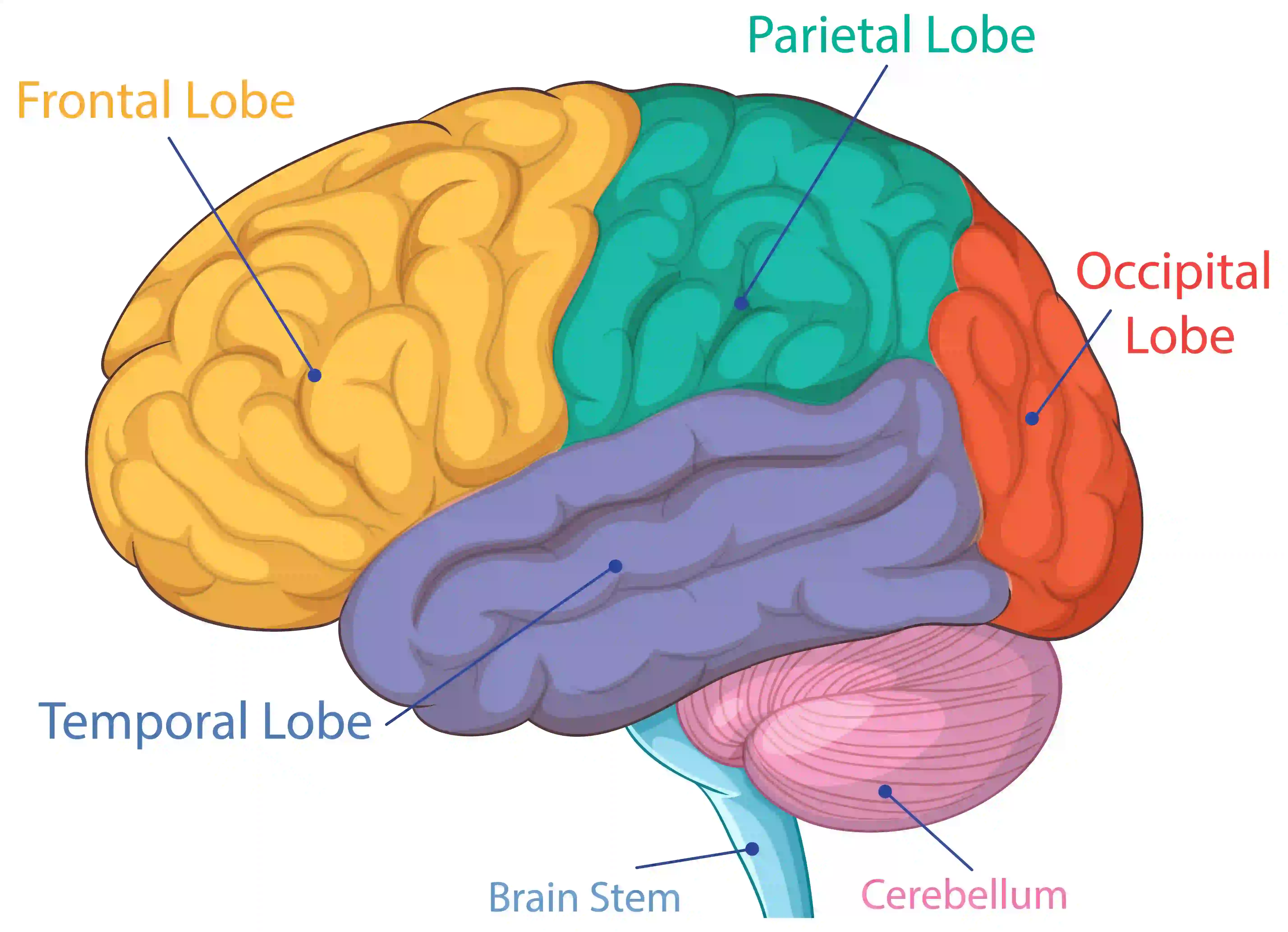
The GABA vs. Glutamate Seesaw
Your brain relies on a balance between "inhibitory" (calming) and "excitatory" (stimulating) neurotransmitters.
- Alcohol mimics GABA: GABA is the brain's primary "calming" chemical. When you drink, alcohol binds to GABA receptors, making you feel relaxed, confident, and sedated.
- The Brain Adapts: To prevent you from slipping into a coma from all this sedation, your brain fights back. It suppresses GABA production and cranks up the production of Glutamate, the brain's primary "excitatory" chemical.
The Rebound Effect: When the alcohol leaves your bloodstream (Zero BAC), the artificial GABA boost disappears instantly. However, your brain is still stuck in "hyper-drive," flooding your system with Glutamate. This leaves you in a state of chemical hyperexcitability.
This glutamate storm affects several areas of the brain shown in the diagram above, including the temporal lobes (emotion) and the frontal lobes (reasoning). The physical result? Tremors, sensitivity to light/sound, and a racing heart.
If you feel your heart pounding while lying in bed the next day, it is a classic sign of this glutamate rebound. You can check your resting heart rate norms using our Target Heart Rate Zone Calculator to see if you are elevated above your baseline, which is a common stress response during hangovers.
Phase 3: The Immune Response (Why It Feels Like the Flu)
Have you ever noticed that a severe hangover feels suspiciously like the early stages of the flu? You ache all over, you're fatigued, and you can't think straight. That is not a coincidence.
Recent scientific studies have shown that alcohol triggers your immune system. It causes the release of agents called cytokines—specifically Interleukin-6 and Interleukin-10. These are the same molecules your body uses to fight off infections like a virus.
High levels of cytokines cause systemic inflammation, leading to:
- Muscle aches and joint pain
- Extreme fatigue and lethargy
- Cognitive fog (inability to concentrate)
- Nausea
This inflammatory response can persist for hours, or even a full day, after the alcohol has been eliminated from your bloodstream. Essentially, your body is fighting a war against the toxins you ingested, and you are feeling the collateral damage.
Phase 4: Sleep Architecture Destruction
You might have "passed out" for 8 hours, so why do you feel completely sleep-deprived? Because alcohol is the enemy of REM sleep.
While alcohol acts as a sedative and helps you lose consciousness faster (reducing "sleep latency"), it destroys the quality of that sleep. It suppresses Rapid Eye Movement (REM) sleep, which is the restorative stage essential for mental clarity, memory consolidation, and emotional regulation.
When the alcohol wears off in the middle of the night (the "rebound" effect mentioned above), your body often wakes up or enters a light, fragmented sleep state. Waking up with a BAC of zero often means waking up after hours of "junk sleep."
To recover, you need to prioritize your next sleep cycle. Use our Sleep Cycle Calculator to determine the exact time you should go to bed tonight to catch up on those lost cycles efficiently.
Phase 5: The Congener Factor
Not all alcohol results in the same "Zero BAC" suffering. The type of drink matters due to compounds called Congeners.
Congeners are minor chemical byproducts of the fermentation process (like methanol, acetone, and tannins) that give beverages their flavor and color. Darker liquors generally have higher congener content.
- High Congener Drinks: Bourbon, Whiskey, Red Wine, Dark Rum.
- Low Congener Drinks: Vodka, Gin, White Rum.
Studies suggest that while the intoxication level is the same, high-congener beverages result in more intense and longer-lasting hangover symptoms, even after the alcohol is fully metabolized.
The Scientific Recovery Protocol
Now that we understand the physiology—that you are battling toxic metabolites, brain chemistry imbalances, and inflammation—how do we fix it? The "hair of the dog" (drinking more) is a myth that simply delays the inevitable crash. Here is a science-backed protocol:
1. Aggressive & Smart Rehydration
Alcohol inhibits the hormone Vasopressin, which tells your kidneys to retain water. This sends water straight to your bladder, flushing out critical electrolytes like potassium, sodium, and magnesium.
Drinking water is good, but drinking water with electrolytes is better. You need to replace the volume lost to reduce the headache (which is partly caused by the brain shrinking slightly away from the skull due to dehydration).
Don't guess your fluid needs. Use our Daily Water Intake Calculator to find your baseline, and aim to exceed it by 500-1000ml on a recovery day.
2. Targeted Nutrition (Cysteine is Key)
Your liver needs help clearing that toxic Acetaldehyde. An amino acid called L-Cysteine interacts with acetaldehyde to neutralize it.
- Eat Eggs: Eggs are rich in cysteine.
- Broccoli and Oats: Also good sources of support for liver enzymes.
- Avoid Heavy Grease: Despite the myth, a greasy burger might just irritate your already inflamed stomach lining.
3. Stabilize Blood Sugar
Alcohol metabolism impairs your liver's ability to produce glucose. This can lead to low blood sugar (hypoglycemia), which contributes to the weakness, trembling, and irritability of a hangover. Complex carbohydrates (toast, crackers) can help stabilize this without spiking insulin too hard.
4. Patience and Rest
Ultimately, the "Zero BAC Hangover" is a biological process that takes time. Your neurotransmitters need to rebalance, and your immune system needs to calm down. There is no magic pill, but understanding the science helps you stop blaming yourself and start treating your body with the care it needs to recover.