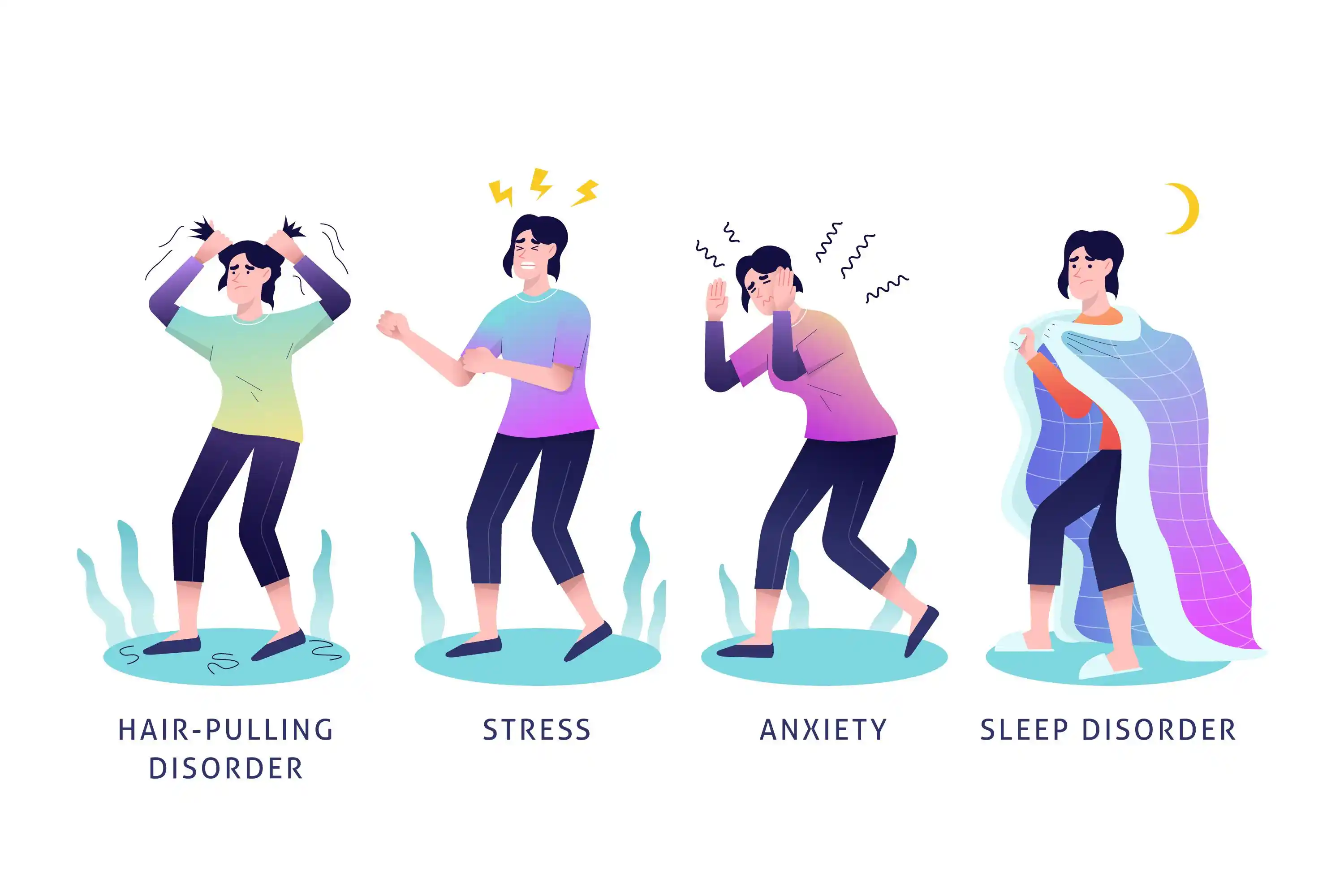
Journaling Prompts for Anxiety: The Ultimate Guide to Calming Your Mind
From Chaos to Clarity: Why Writing Is the Best Medicine
We live in a noisy world. Between the constant ping of notifications, the pressure of work, and the endless loop of "what-if" scenarios playing in our heads, it is no wonder that anxiety has become the defining emotion of our era. When your mind feels like a browser with 100 tabs open, you need a way to force-quit the unnecessary applications.
Enter Journaling. This isn't just about keeping a "Dear Diary" like a teenager. Therapeutic journaling is a scientifically proven method to externalize your thoughts, detach from your emotions, and analyze your triggers objectively. It is one of the most accessible forms of self-care, requiring nothing more than a pen, paper, and a few minutes of honesty.

In this comprehensive guide, we will explore the neuroscience behind writing for anxiety, how to create a routine that sticks, and provide you with a master list of prompts designed to dismantle your fears.
The Neuroscience: Why Does It Work?
When you are anxious, your Amygdala (the brain's emotional center) is firing on all cylinders, signaling "Danger! Danger!" even when you are safe sitting on your couch. This "fight or flight" response shuts down rational thinking.
Writing activates the Prefrontal Cortex—the analytical, rational part of your brain. By putting feelings into words, you are physically forcing your brain to shift activity from the emotional center to the logical center. This process is called "affect labeling," and studies show it significantly reduces the intensity of negative emotions.
Is Your Anxiety Physical?
Anxiety doesn't just live in the mind; it manifests in the body. High stress levels can spike your cortisol and blood pressure. If you often feel physical tension or a racing heart, it is crucial to monitor your vitals. Use our Blood Pressure Analyzer to see if stress is impacting your cardiovascular health.
How to Start: Overcoming the "Blank Page" Fear
The hardest part of journaling is the first sentence. Here are three rules to break the barrier:
- No Editing: Do not worry about grammar, spelling, or handwriting. Nobody else will read this.
- Time Blocking: Set a timer for 5 minutes. You can do anything for 5 minutes.
- The "Brain Dump": If you don't know what to write, just write "I don't know what to write" until a real thought comes. It works every time.
Category 1: Morning Prompts (Setting the Intention)
Anxiety often strikes the moment we wake up (the "morning dread"). Use these prompts to anchor yourself before the day begins.
- The "One Thing" Focus: "If I only accomplish one small thing today to make myself proud, what would it be?"
- Visualizing Calm: "How do I want to feel at the end of the day, and what is one choice I can make to ensure that happens?"
- The Reality Check: "What is one worry I have about today, and what is one reason why that worry might not be true?"
- Body Scan: "Where am I holding tension in my body right now? (Jaw, shoulders, stomach). What happens if I take a deep breath and release it?"
Category 2: The "Brain Dump" (For Overthinking)
When your thoughts are racing, get them out of your head and onto the paper. This is like cleaning out a cluttered closet.
- The List of nags: Write a bulleted list of everything that is bothering you right now. No detail is too small. Once it is on paper, you don't have to carry it in your mind.
- Fact vs. Fiction: "I am feeling anxious about [Situation]. What is the story I am telling myself? What are the actual, objective facts?"
- The Worst-Case Scenario: "What is the absolute worst thing that could happen? If that happened, how would I cope? (Often, realizing we could cope reduces the fear)."
- Control Audit: Draw a circle. Inside, write what you can control. Outside, write what you cannot. Focus only on the inside.

Category 3: Self-Compassion & "Shadow Work"
Anxiety often stems from being too hard on ourselves. As seen in the image above, writing a letter to yourself can be a powerful healing tool.
- The Inner Child: "Write a letter to your younger self who is scared. What would you tell them to make them feel safe?"
- The Best Friend Perspective: "If my best friend came to me with these exact worries, what would I tell them? Why can't I say that to myself?"
- Evidence of Resilience: "List 3 hard times in the past that you survived. How did you get through them?"
- "Dear Me": Write a forgiveness letter to yourself for a mistake you are still holding onto.
The Hidden Triggers: Lifestyle Factors Affecting Your Anxiety
While journaling heals the mind, you must also address the biological triggers of anxiety. Often, what we think is a "mental health day" is actually a biological reaction to our habits.
1. The Digital Dopamine Loop
Doomscrolling social media or checking emails late at night keeps your brain in a state of hyper-arousal. The blue light and constant information flow mimic danger signals to the brain.
Action Step: Are your eyes tired? Are you spending too much time online? Check your risk with our Screen Time & Eye Strain Calculator.
2. The Caffeine Jitters
Caffeine blocks adenosine (the chemical that makes you tired) and increases adrenaline. For an anxious person, a cup of coffee can feel like a panic attack. The timing matters just as much as the amount.
Action Step: Find out exactly when you should stop drinking coffee to protect your sleep with our Caffeine Cut-off Calculator.
3. The Sleep Debt Cycle
Everything feels worse when you are tired. Sleep deprivation weakens the connection between the amygdala and the prefrontal cortex, making it harder to control emotions.
Action Step: Wake up refreshed by timing your sleep cycles. Use our Sleep Cycle Calculator.
4. The Nicotine Trap
Many people smoke to "relieve stress," but nicotine is a stimulant that actually increases physiological anxiety and heart rate. The relief you feel is just the withdrawal symptoms ending.
Action Step: Ready to break the cycle? See how much money and health you can save with our Quit Smoking Calculator.
Category 4: Gratitude (Rewiring the Brain)
You cannot feel anxious and grateful at the exact same moment. Gratitude forces the brain to scan the environment for positives (safety) rather than threats (danger).
- The Senses: "What is one thing I can smell, see, taste, touch, and hear right now that is pleasant?"
- The People: "Who is one person that makes my life easier, and have I thanked them?"
- The Mundane: "What is a modern convenience (like hot water or the internet) that I take for granted?"
- The Self: "What is one thing my body does for me that I appreciate?"
Conclusion: Your Safe Space
Your journal is the one place in the world where you don't have to perform. You don't have to be "together," "strong," or "happy." You just have to be.
Start today. Pick one prompt from the list above, set a timer for 5 minutes, and write. You might be surprised at how much lighter you feel when you put the pen down.