Creatine Loading Phase: Do You Really Need It? A Scientific Guide
The Most Studied Supplement in History
Walk into any gym locker room, and you will hear the rhythmic shaking of protein bottles. Among the myriad of supplements available—from pre-workouts to BCAAs—one stands alone as the undisputed king of performance research: Creatine Monohydrate.
Despite thousands of studies proving its safety and efficacy for increasing strength, muscle mass, and power output, confusion still surrounds how to take it. Specifically, the controversial "Loading Phase."
Do you really need to choke down 20 grams of powder a day for a week? Or is that just a marketing ploy to make you buy more tubs? In this comprehensive guide, we will break down the physiology of muscle saturation, compare the "Loading" vs. "Maintenance" protocols, and help you calculate the exact dosage your body needs.
The Physiology: How Creatine Works
To understand dosing, you must understand the mechanism. Your body uses a molecule called ATP (Adenosine Triphosphate) for energy. When you lift a heavy weight, you burn ATP in seconds. To continue lifting, your body needs to regenerate ATP quickly.
It does this using stored Phosphocreatine. The more creatine stored in your muscles, the more "fuel" you have for explosive movements. This leads to:
- More Reps: Squeezing out reps 10, 11, and 12 when you would have failed at 8.
- Higher Training Volume: Which is the primary driver of hypertrophy (muscle growth).
- Cellular Hydration: Creatine pulls water into the muscle cell, creating a more anabolic environment.
The goal of supplementation is simple: To reach 100% Muscle Creatine Saturation. The only question is how fast you want to get there.
Method 1: The Loading Phase (The "Fast Track")
The traditional "Loading Phase" involves saturating your muscles as quickly as humanly possible.
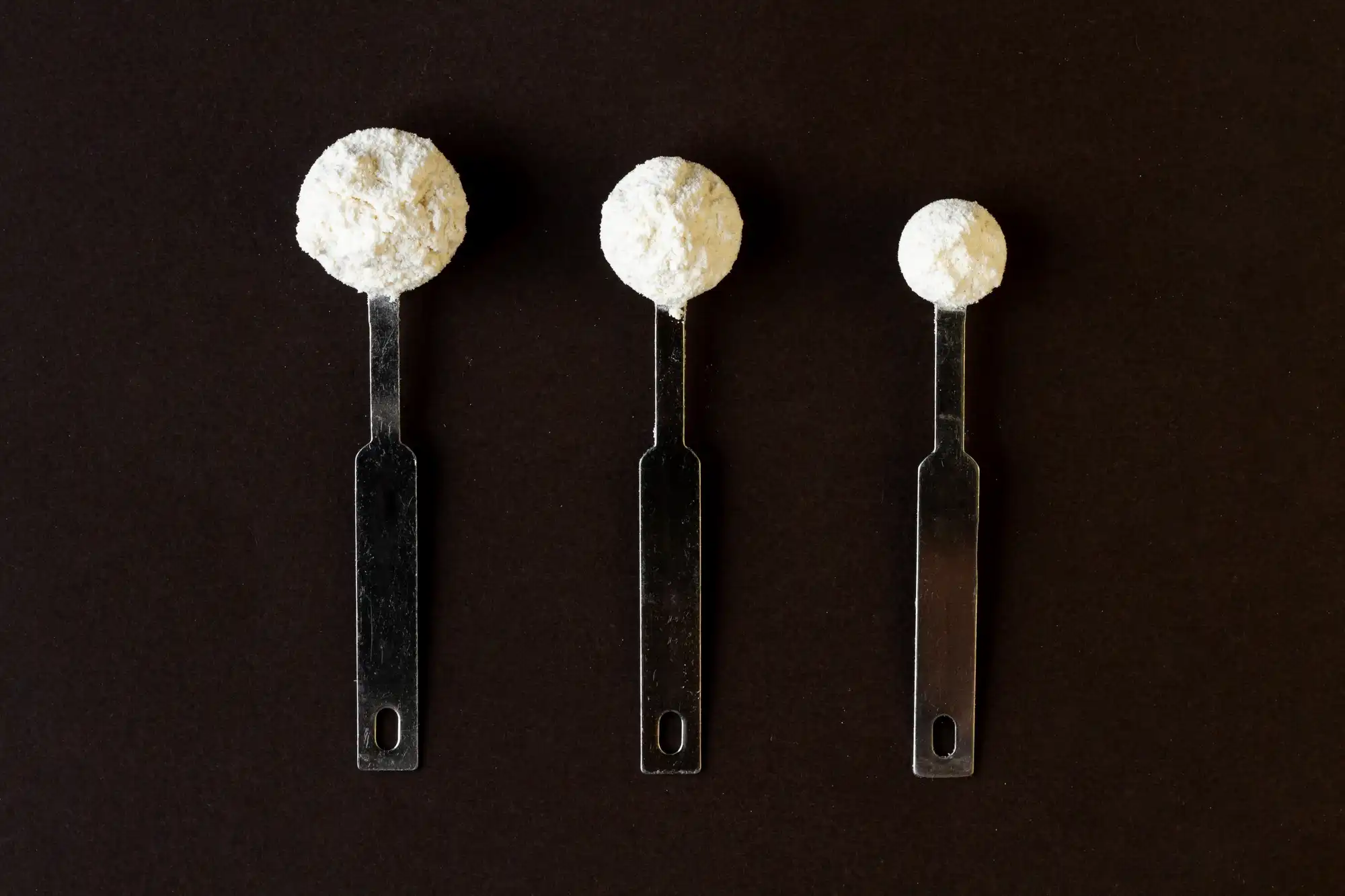
The Protocol:
Typically 20 grams per day, split into 4 doses of 5 grams, for 5 to 7 days.
The Pros:
- Instant Results: You will reach full muscle saturation in roughly 1 week.
- Psychological Boost: You may see the scale go up (water weight in muscles) and feel stronger almost immediately.
The Cons:
- Digestive Distress: Taking 20g of creatine can cause cramping, bloating, and diarrhea in many people.
- Water Bloating: The rapid influx of water can sometimes cause systemic bloating (puffiness) rather than just intramuscular hydration.
- Waste: Your body can only absorb so much; much of the excess is excreted in urine.
Don't Guess Your Dosage
Is 20g right for you? A 100kg bodybuilder needs a different loading strategy than a 60kg runner. Use our Creatine Calculator to get your precise Loading and Maintenance numbers based on your body weight.
Method 2: The Maintenance Protocol (The "Steady Path")
This is the modern, preferred approach for those with sensitive stomachs.
The Protocol:
Simply take 3 to 5 grams per day, every day.
The Pros:
- Zero Side Effects: Almost no risk of stomach upset or bloating.
- Simple: One scoop a day. No complex timing.
- Same Destination: Research shows that after 28 days, muscle saturation levels are identical to the loading group.
The Cons:
- Patience Required: You won't feel the full benefits for about 3-4 weeks.
The Water Connection: Addressing the "Bloat" Myth
A common fear is that creatine makes you "fat" or "puffy." This is a misunderstanding of biology. Creatine is osmotically active, meaning it attracts water.
However, we want this water. We want it inside the muscle cell (Intracellular), not under the skin (Subcutaneous). This hydration increases muscle volume (making you look bigger/toned) and improves protein synthesis.
The Golden Rule: If you take creatine, you MUST increase your water intake. If you don't drink enough, you may experience cramping or dehydration symptoms.
Tool: How much extra water do you need? Calculate your new total with our Water Intake Calculator.
Timing: Pre-Workout, Post-Workout, or Anytime?
Does it matter when you take your scoop? The science is split, but leans slightly towards Post-Workout.
After training, your body is primed for nutrient absorption. Taking creatine with a source of carbohydrates and protein (like a shake) can spike insulin, which acts as a "shuttle," driving creatine into the muscle cells more effectively.
However, consistency is far more important than timing. If you forget to take it post-workout, taking it at breakfast is infinitely better than not taking it at all.
Diet Planning: Ensure your post-workout shake fits your daily goals using our Macronutrient Calculator.
Common Myths Debunked
Myth 1: "Creatine damages kidneys."
Fact: This myth stems from the fact that creatine increases creatinine levels in blood tests (a marker usually used for kidney health). However, for healthy individuals, this is a "false positive" due to the supplement, not organ damage. Long-term studies (5+ years) have shown no adverse renal effects in healthy populations.
Myth 2: "It causes hair loss."
Fact: Based on a single study from 2009 regarding DHT levels in rugby players that has never been successfully replicated. The current scientific consensus is that creatine does not cause baldness.
Myth 3: "You need to cycle it."
Fact: Unlike caffeine, your body does not build a "tolerance" to creatine. You do not need to stop taking it. In fact, stopping simply drains your saturation levels, requiring you to load again later.
Measuring Success: Is It Working?
Since creatine doesn't have an acute "buzz" like caffeine, how do you know it's working?
- Scale Weight: You should see a 1-2kg increase in the first weeks (water weight). This is good!
- Gym Performance: Look for strength gains. Are you hitting a PR on your bench or squat? Track your strength progress with our 1 Rep Max Calculator.
- Muscle Size: Use a tape measure or body fat calipers to track lean mass changes over time. Verify your gains with our FFMI (Fat-Free Mass Index) Calculator.
Conclusion: To Load or Not To Load?
Here is our expert verdict:
- Load (20g/day) IF: You have a competition in 1 week, or you are very impatient and have a "cast-iron stomach."
- Maintenance (5g/day) IF: You want to avoid bloating, save money, and are planning to take creatine long-term (which you should).
Ready to start? Stop guessing your scoop size. Get your personalized plan right now.
Your Performance Toolkit
Optimize your gains with these essential tools:
- Creatine Calculator - Your dosage plan.
- Water Intake Calculator - Prevent dehydration.
- FFMI Calculator - Track muscle growth.
- 1RM Calculator - Track strength.