Understanding BMI: A Comprehensive Guide Beyond the Numbers
What is Body Mass Index (BMI)? A Professional Look
In the vast world of health metrics, Body Mass Index (BMI) is perhaps one of the most widely known and frequently used. You’ve likely had it calculated at your doctor's office or seen it referenced in health articles. But what is BMI, really?
From a clinical perspective, BMI is a simple, non-invasive screening tool that provides a numerical estimate of a person's weight status relative to their height. It was developed in the 19th century by Adolphe Quetelet and is used by healthcare professionals and researchers to quickly categorize individuals into weight groups that may correlate with health risks.
It's crucial to understand this upfront: BMI is a screening tool, not a diagnostic tool. It doesn't tell the full story of your health, but it serves as a valuable starting point for further health assessment.
How to Calculate Your BMI: The Formula Explained
The calculation for BMI is straightforward, which is why it's so widely adopted. The formula differs slightly depending on whether you use the metric or imperial system.
Metric Formula
The most common formula used globally is:
BMI = weight (kg) / [height (m)]²
Imperial Formula
If you're using pounds and inches, the calculation is:
BMI = [weight (lbs) / (height (in))²] x 703
An Example BMI Calculation
Let's put the metric formula into practice.
- Person: A 30-year-old adult.
- Weight: 75 kilograms (kg)
- Height: 1.80 meters (m)
Calculation:
- First, square the height: 1.80 * 1.80 = 3.24
- Next, divide the weight by the squared height: 75 / 3.24 = 23.15
Result: This individual's BMI is 23.15, which falls into the "Normal weight" category.
For an instant calculation without the math, you can always use our BMI Calculator.
Understanding the BMI Categories
Once you have your BMI number, you can see which category it falls into. The World Health Organization (WHO) defines the primary categories for adults:
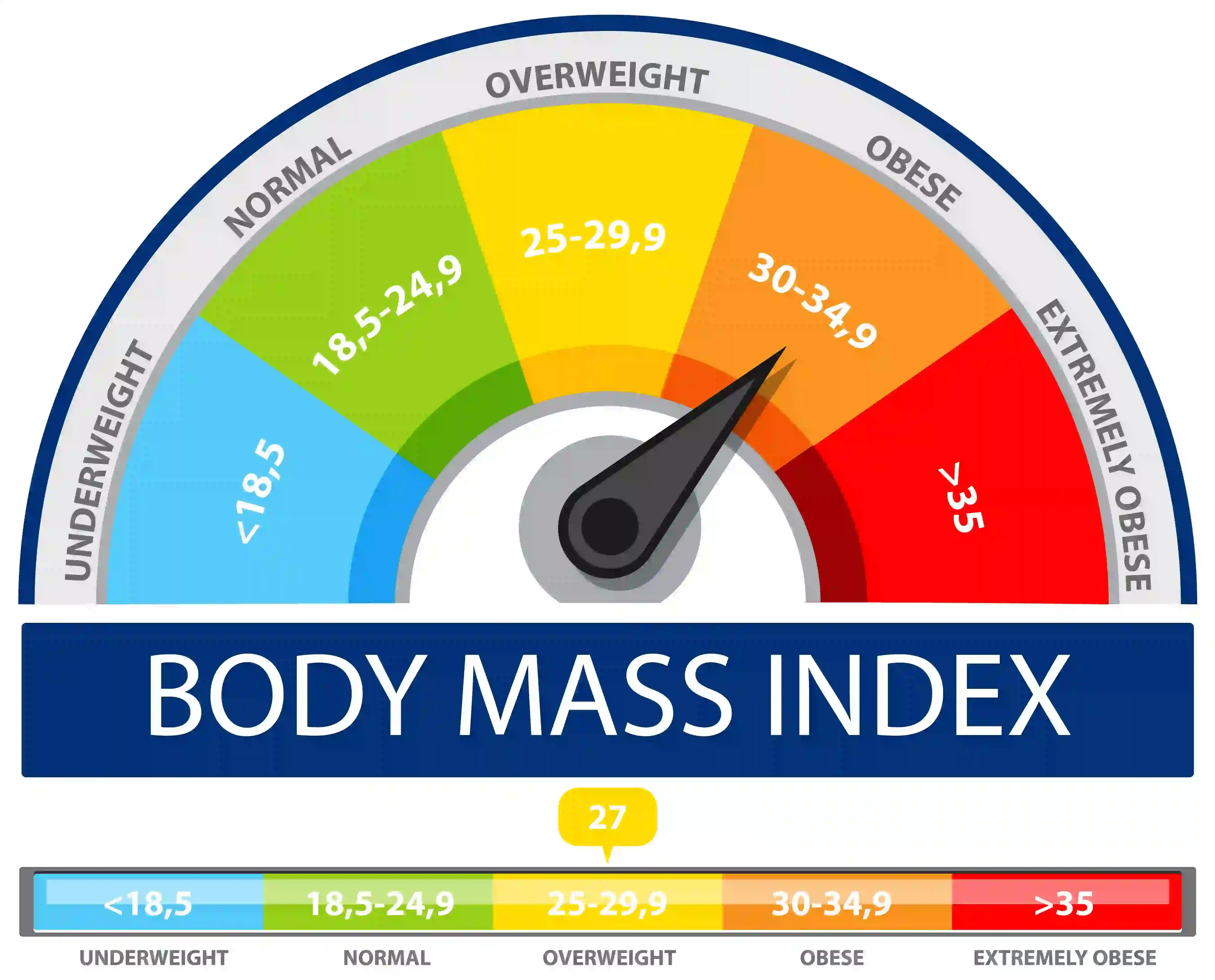
- Underweight: BMI less than 18.5
- Normal weight: BMI 18.5 – 24.9
- Overweight: BMI 25 – 29.9
- Obesity Class I: BMI 30 – 34.9
- Obesity Class II: BMI 35 – 39.9
- Obesity Class III (Extremely Obese): BMI 40 or greater
The Health Risks Associated with BMI Scores
These categories exist because they correlate with potential health outcomes. It's important to understand the risks on both ends of the spectrum.
Risks of High BMI (Overweight & Obesity)
A consistently high BMI is statistically linked to an increased risk of several serious health conditions, including:
- Type 2 Diabetes
- High Blood Pressure (Hypertension)
- Heart Disease and Stroke
- Certain types of Cancer
- Sleep Apnea
- Osteoarthritis
- Fatty Liver Disease
Risks of Low BMI (Underweight)
Conversely, a BMI below 18.5 is not without its own set of risks. Being underweight can be a sign of malnutrition or an underlying medical issue and can lead to:
- A weakened immune system, leading to frequent illness
- Nutritional deficiencies (e.g., Anemia)
- Osteoporosis or decreased bone density
- Fertility issues
- Hair loss and skin problems
The Critical Limitations: What BMI Doesn't Tell You
This is where we go "beyond the numbers." While BMI is a useful population-level metric, it has significant limitations when assessing individual health. A healthcare professional will never (and should never) assess your health based on BMI alone.
Here’s what BMI fails to consider:
- Body Composition (Muscle vs. Fat): BMI cannot differentiate between mass from muscle, bone, or fat. A professional athlete or bodybuilder could have a very high BMI due to significant muscle mass and be classified as "Overweight" or "Obese" despite being in peak physical condition.
- Fat Distribution: Where you store fat is just as important as how much you have. Visceral fat (fat stored around your organs) poses a much higher health risk than subcutaneous fat (fat under the skin). BMI tells you nothing about this.
- Demographic Variances: Body composition and associated health risks can differ across various ethnic groups, genders, and ages. For example, some studies suggest that individuals of Asian descent may experience health risks at a lower BMI threshold.
- Age-Related Changes: As we age, we tend to lose muscle mass (sarcopenia) and gain fat mass, even if our weight stays the same. An older adult's "normal" BMI might mask an unhealthy level of body fat.
Nuances in BMI: Children, Health Paradoxes, and Alternatives
The world of body composition is not black and white. Here are key aspects to understand.
How is BMI Used for Children and Teens?
The adult categories do not apply to children. For individuals aged 2-19, BMI is calculated using the same formula but is interpreted using percentile charts. A child's BMI is plotted on a growth chart for their specific age and sex. Categories are then defined by these percentiles:
- Underweight: Less than the 5th percentile
- Healthy weight: 5th percentile to less than the 85th percentile
- Overweight: 85th to less than the 95th percentile
- Obesity: 95th percentile or greater
The "Metabolically Healthy Obese" (MHO) Debate
You may hear about individuals who have a BMI in the "Obese" category but do not have associated metabolic issues like high blood pressure, high cholesterol, or insulin resistance. This is known as the MHO paradox. While it highlights that BMI isn't the only factor, long-term studies suggest that many individuals in this group eventually develop metabolic problems. It remains a topic of scientific debate and underscores the need for a full health panel, not just a BMI reading.
What Are the Alternatives to BMI?
If BMI is so limited, what else can be used? Healthcare professionals often use these metrics alongside BMI:
- Waist Circumference: A simple tape measurement that is a good indicator of abdominal (visceral) fat.
- Waist-to-Hip Ratio (WHR): Compares waist circumference to hip circumference.
- Body Fat Percentage: This directly measures the proportion of your body composed of fat. It can be estimated via skinfold calipers, Bioelectrical Impedance Analysis (BIA) scales, or measured very accurately with a DEXA scan.
Beyond BMI: A Holistic Approach to Your Health
If BMI is just one small piece of the puzzle, what should you focus on? A truly professional health assessment looks at the complete picture.

Your health is a complex interplay of various factors. Instead of focusing solely on the number on the scale or your BMI result, consider these vital health indicators:
- Dietary Quality: Are you eating a balanced diet rich in whole foods, fruits, vegetables, lean proteins, and healthy fats?
- Physical Activity: Are you meeting recommended guidelines for both cardiovascular exercise and strength training?
- Metabolic Markers: What are your blood pressure, cholesterol levels (LDL, HDL, triglycerides), and fasting blood sugar? These numbers provide direct insight into your metabolic health.
- Lifestyle Factors: How is your sleep quality, stress level, and water intake? These are foundational pillars of well-being.
- How You Feel: Do you have energy throughout the day? Can you perform daily activities with ease? How is your mental and emotional health?
Practical Recommendations & Your Next Step
So, you’ve learned what BMI is and what it isn't. What now?
- Use It as a Starting Point: Don't obsess over the number, but don't ignore it either. If your BMI falls into the Underweight, Overweight, or Obese categories, it's a valid reason to schedule a check-up with your healthcare provider.
- Consult a Professional: A doctor, registered dietitian (RD), or certified personal trainer can help you interpret your BMI in the context of your personal health profile, lifestyle, and goals.
- Focus on Habits, Not Numbers: Instead of chasing a specific BMI, focus on building sustainable, healthy habits. Aim to add more movement to your day, incorporate one more serving of vegetables, or prioritize an extra hour of sleep. These small, consistent changes are what lead to long-term health.
Find Your Number in Seconds
Curious about your own BMI? For a quick, easy, and confidential calculation, use our BMI Calculator.
Use this tool as your first step. It can help you understand your starting point and empower you to have a more informed conversation with your healthcare team about what truly matters: your overall, holistic health.